
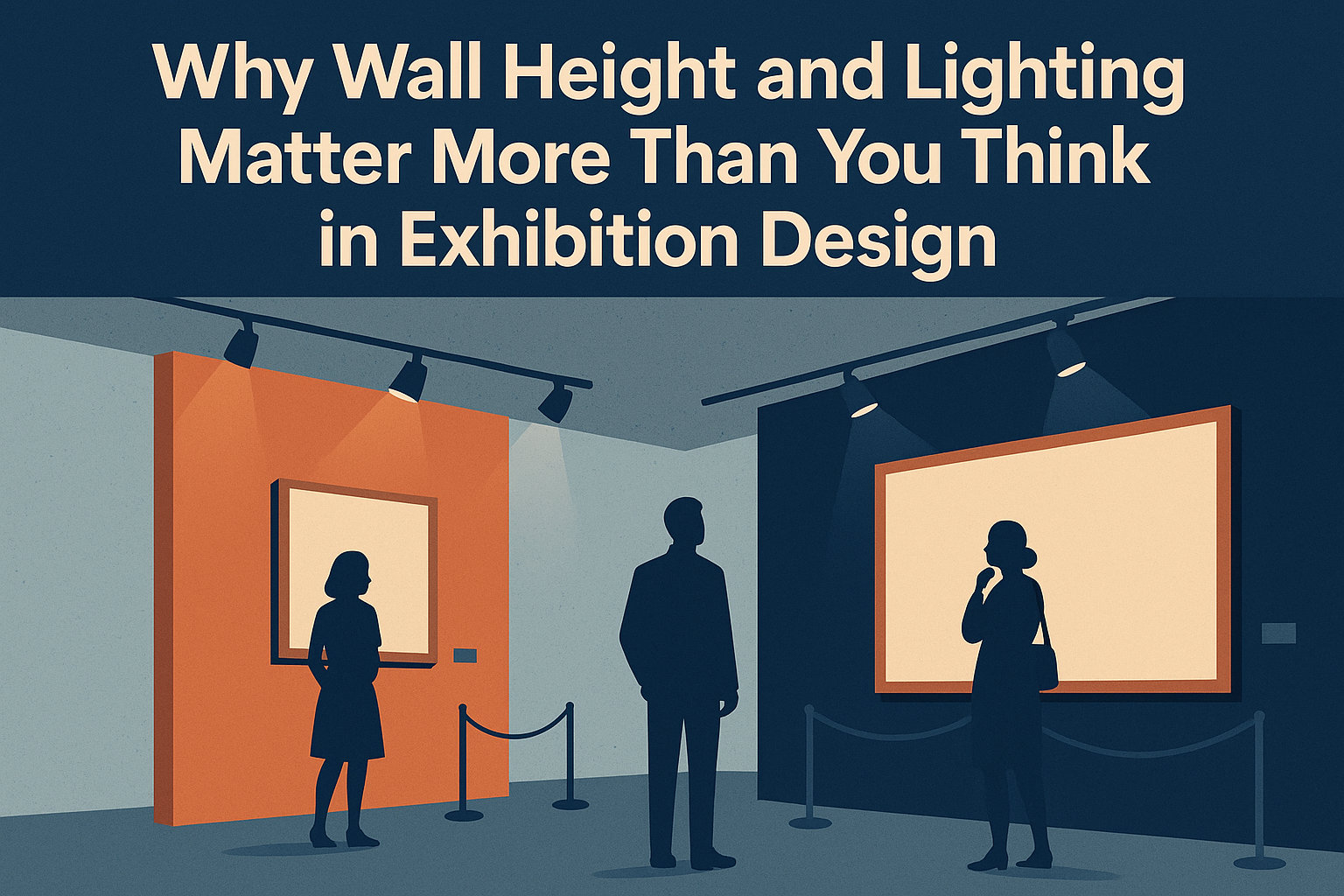
Why Wall Height and Lighting Matter More Than You Think in Exhibition Design
In exhibition design, it’s easy to focus on graphics, furniture, or digital displays — but two elements quietly shape the entire visitor experience more than anything else: wall height and lighting. These foundational choices influence flow, visibility, atmosphere, and how your brand is perceived the moment someone approaches your stand.
Whether you’re creating a trade show booth, a pop-up exhibition, or an art showcase, the right wall height and lighting can dramatically elevate your space and make your display unforgettable. Here’s why they matter far more than most exhibitors realise.
1. Wall Height Creates Presence and Stops Visitors in Their Tracks
Your exhibition walls are the first thing people see — and height determines how bold or invisible your stand appears.
Tall walls = strong presence.
Higher walls naturally stand out in a crowded exhibition hall. They:
Make your stand look larger and more impressive
Allow for high-level branding visible from afar
Create privacy and immersion
Help you define strong architectural structure
Many standard stands rely on low or mid-height walls, which blend into the background. Taller walls instantly elevate your design and draw visitors in.
Shorter walls = openness and accessibility.
Sometimes, lower walls are the right choice, especially if you want:
A more inviting, open feel
Clear sightlines into product demos
Better communication between staff and visitors
A softer, retail-like atmosphere
Choosing the right wall height based on your goals is crucial.
2. Wall Height Shapes Layout, Flow, and Zoning
Your exhibition walls don’t just display branding — they shape behaviour.
High walls help you:
Divide the space into quiet meeting zones
Create immersive story-driven experiences
Build dramatic backdrops for hero products
Control the visitor journey from entry to exit
Lower walls help you:
Keep the stand visually open
Encourage browsing
Maintain visibility from multiple angles
Thinking strategically about wall height ensures your layout feels intentional, not accidental.
3. Lighting Can Make or Break the Entire Stand
Great lighting transforms your stand into a high-impact environment.
Poor lighting makes even the best design look dull.
Lighting affects:
How your graphics read
The clarity of product displays
The overall mood and energy of your stand
Visitor engagement and dwell time
How professionally your brand is perceived
A beautifully designed stand without good lighting is like a gallery with the lights turned off.
4. Lighting Highlights Your Brand Story
Lighting isn’t just functional — it’s a storytelling tool.
Use lighting to:
Create dramatic focus on hero products
Highlight key messaging areas
Draw visitors deeper into the stand
Separate zones and visual layers
Add mood, colour, or atmosphere
Integrated lighting in your exhibition walls (like LED strips or mounted spotlights) enhances both architecture and engagement.
5. Height and Lighting Work Together to Create Visual Impact
Wall height gives your stand structure; lighting gives it emotion.
Together, they shape the visitor experience.
High walls + accent lighting
= a premium, high-end look that feels immersive.
Lower walls + bright ambient lighting
= an inviting, open environment perfect for demos and interaction.
Mid-height walls + directional spotlights
= clean, modern layouts ideal for product-led brands.
Understanding how the two interact gives you total control over how visitors feel in your space.
6. Correct Lighting Enhances Colour, Texture, and Detail
Whether you’re displaying artwork, product samples, or printed graphics, lighting dramatically affects how they appear.
Poor lighting can:
Wash out colour
Create harsh shadows
Cause glare on glossy surfaces
Make details difficult to see
Professional lighting does the opposite:
Enhances vibrancy
Reveals textures and materials
Adds depth and dimension
Makes your stand look more premium
If your brand relies on visual quality, lighting should be a top priority.
7. Wall Height Influences Branding Opportunities
Your exhibition walls are massive branding surfaces — if used effectively.
Taller walls offer:
High-level logos visible across the hall
Larger graphic areas
Space for storytelling panels
A stronger architectural identity
If you want to dominate the visual space, height is a major advantage.
8. Lighting Affects Visitor Mood and Behaviour
Lighting can subtly influence how long visitors stay and how they feel while inside your stand.
Warm lighting creates comfort and hospitality
Cool lighting communicates innovation and modernity
Bright lighting encourages exploration
Soft lighting creates intimacy
Good lighting design can actually shape visitor decisions and emotional response.
9. Both Elements Impact Your Stand’s Photogenic Quality
In the age of digital and social media, your stand must photograph well.
Wall height improves:
Backgrounds for photos
Visibility of branding in images
The overall composition of the stand
Lighting improves:
Colour accuracy
Sharpness and clarity
How your stand appears on video
The visual quality of content visitors share
A stand that photographs well extends your reach far beyond the exhibition hall.
Conclusion: Small Design Choices That Make a Huge Difference
Wall height and lighting might seem like technical details, but in exhibition design, they are two of the biggest contributors to professionalism, presence, and visitor engagement.
The right height creates architecture.
The right lighting creates atmosphere.
Together, they determine how your stand is perceived — long before a visitor steps inside.
When you get these elements right, everything else in your exhibition design becomes more effective.
Need Support Designing Exhibition Walls and Lighting?
We specialise in modular and temporary exhibition walls and lighting-ready systems that help brands create high-impact, beautifully illuminated stands.
👉 Contact us today to make your next exhibition stand out — from floor to ceiling.