
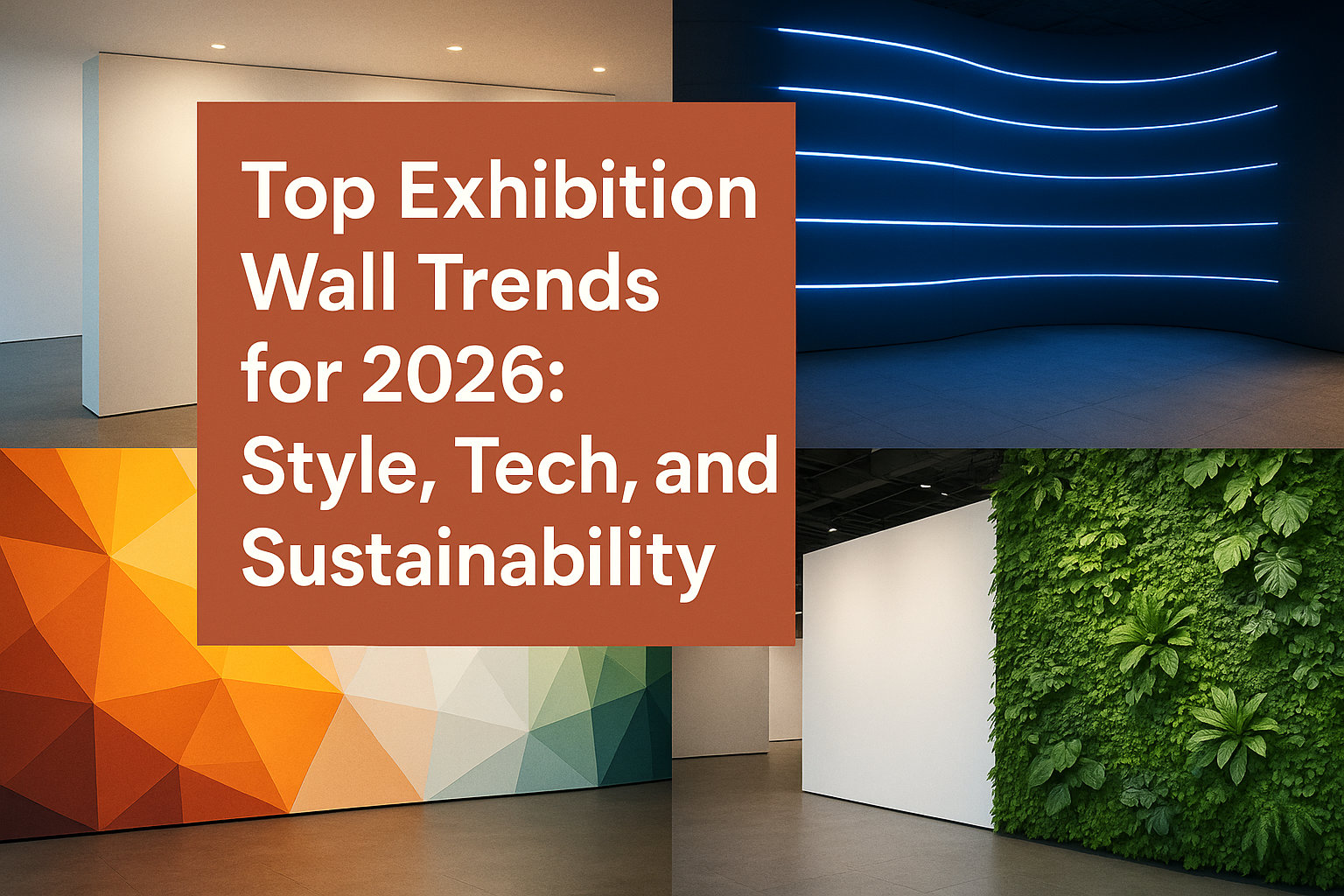
Top Exhibition Wall Trends for 2026: Style, Tech, and Sustainability
Exhibition design is evolving faster than ever. As brands compete for attention in busy event halls, exhibition walls are becoming more than simple structures — they’re interactive, sustainable, and deeply integrated into a brand’s storytelling. In 2026, the trends shaping exhibition spaces are bold, tech-driven, and environmentally conscious.
Whether you’re a designer, exhibitor, or event organiser, these are the top exhibition wall trends for 2026 you’ll want to watch.
1. Sustainable Exhibition Walls Take Centre Stage
Sustainability is no longer optional — it’s a requirement. In 2026, demand is increasing for eco-friendly exhibition walls built from reusable, recycled, and low-impact materials.
What’s trending:
-
Modular exhibition walls that can be reused for years
-
Wall systems made from recycled aluminium or responsibly sourced timber
-
Low-VOC and water-based finishes
-
Waste-free install and dismantle processes
-
Lightweight components that reduce transport emissions
Brands are choosing greener alternatives not just for environmental reasons, but because visitors now expect sustainability to be visible and genuine.
2. Seamless Modular Systems for Instant Reconfiguration
Flexibility is one of the biggest trends of 2026. Exhibitors want walls that adapt to different venues, stand sizes, and event types without needing new builds every time.
Modular walls are trending because they:
-
Reconfigure quickly into new layouts
-
Allow brands to scale up or down effortlessly
-
Pack flat and transport easily
-
Deliver a premium, gallery-like finish
-
Support reusable stand strategies
Modular exhibition walls are becoming the backbone of efficient event planning, especially for businesses attending multiple shows per year.
3. Integrated Tech: Screens, Sensors, and Smart Lighting
Technology is moving directly into the walls themselves. In 2026, exhibition walls aren’t just passive structures — they’re becoming functional digital hubs.
Key tech integrations:
-
Built-in LED screens for dynamic presentations
-
Touchscreen panels for interactive product experiences
-
Smart lighting embedded within the wall structure
-
QR code callouts incorporated into wall graphics
-
Projection mapping on textured wall surfaces
-
Wall-mounted AR and VR interaction points
The result? Stands that feel alive, immersive, and responsive.
4. Textured and Tactile Wall Finishes Add Depth
Minimalist white walls are still classic, but 2026 sees a rise in textured exhibition walls that create richer and more memorable environments.
Popular finishes include:
-
Soft-touch matte coatings
-
Fabric-wrapped acoustic panels
-
Wood veneer or timber slats
-
Concrete and industrial textures
-
Metallic or brushed surfaces
-
3D panel designs
Textures enhance lighting, improve photo opportunities, and help define brand identity in ways flat surfaces cannot.
5. High-Level Branding and Elevated Graphics
To stand out above the crowd, brands are raising their visual identity — literally.
Walls are getting taller, and high-level branding is becoming standard.
Trending design choices:
-
Double-height exhibition walls
-
Overhead graphic panels
-
Elevated logos visible across the hall
-
Multi-tiered visual zones (eye-level + high-level messaging)
With so much competition, height is one of the simplest ways to amplify brand visibility.
6. Multi-Zone Layouts Created Using Wall Dividers
Exhibition stands in 2026 are becoming more organised, multi-purpose spaces — and walls are the key to dividing areas without feeling enclosed.
Brands are using exhibition walls to create:
-
Demo zones
-
Private meeting areas
-
Immersive storytelling spaces
-
Product galleries
-
Content creation corners
-
Lounge or hospitality zones
Wall systems act as the architectural framework for these versatile environments.
7. Lightweight, Quick-Build Walls for Speed and Efficiency
Time pressures aren’t going away — and the industry is responding with quick-build exhibition walls that minimise setup and dismantling time.
The top features include:
-
Click-lock connectors
-
Tool-free assembly
-
Pre-finished panels
-
Integrated cable management
-
Compact transport cases
These systems help exhibitors meet tight build windows and reduce labour costs.
8. Backlit Walls and Edge-Lit Features for Wow Factor
Lighting is becoming part of the wall structure itself, creating dramatic visual effects that grab attention from afar.
Trending lighting techniques:
-
Backlit fabric graphics
-
LED edge lighting around panels
-
Wall-mounted light bars
-
Halo-lit logos
-
Spotlight rails built into wall tops
Backlighting enhances depth, colour, and atmosphere — making walls work harder as visual features.
9. Hybrid Walls That Blend Physical and Digital Storytelling
2026 is the year of hybrid exhibition design. Walls combine print, digital layers, and interactive elements to tell deeper stories.
Examples include:
-
Printed graphics with embedded screens
-
Physical product shelving integrated with AR callouts
-
Wall textures enhanced by projection overlays
-
QR-linked storytelling zones
-
Physical samples paired with digital demos
This hybrid approach appeals to both tactile and tech-oriented audiences.
Conclusion: Exhibition Walls in 2026 Are Smarter, Greener, and More Dynamic
From modular construction to integrated tech and sustainable materials, exhibition walls are evolving into multifunctional design elements that define the future of event spaces.
The key trends shaping 2026 focus on:
-
Flexibility
-
Reusability
-
Immersion
-
Sustainability
-
High-impact branding
No matter the size of your stand, these wall trends can help you create a modern, engaging, and future-ready exhibition space.
Looking to Upgrade Your Exhibition Walls for 2026?
We specialise in modular, sustainable, and tech-ready exhibition walls that bring your stand to life.
👉 Contact us today to stay ahead of the trends and transform your exhibition presence.