
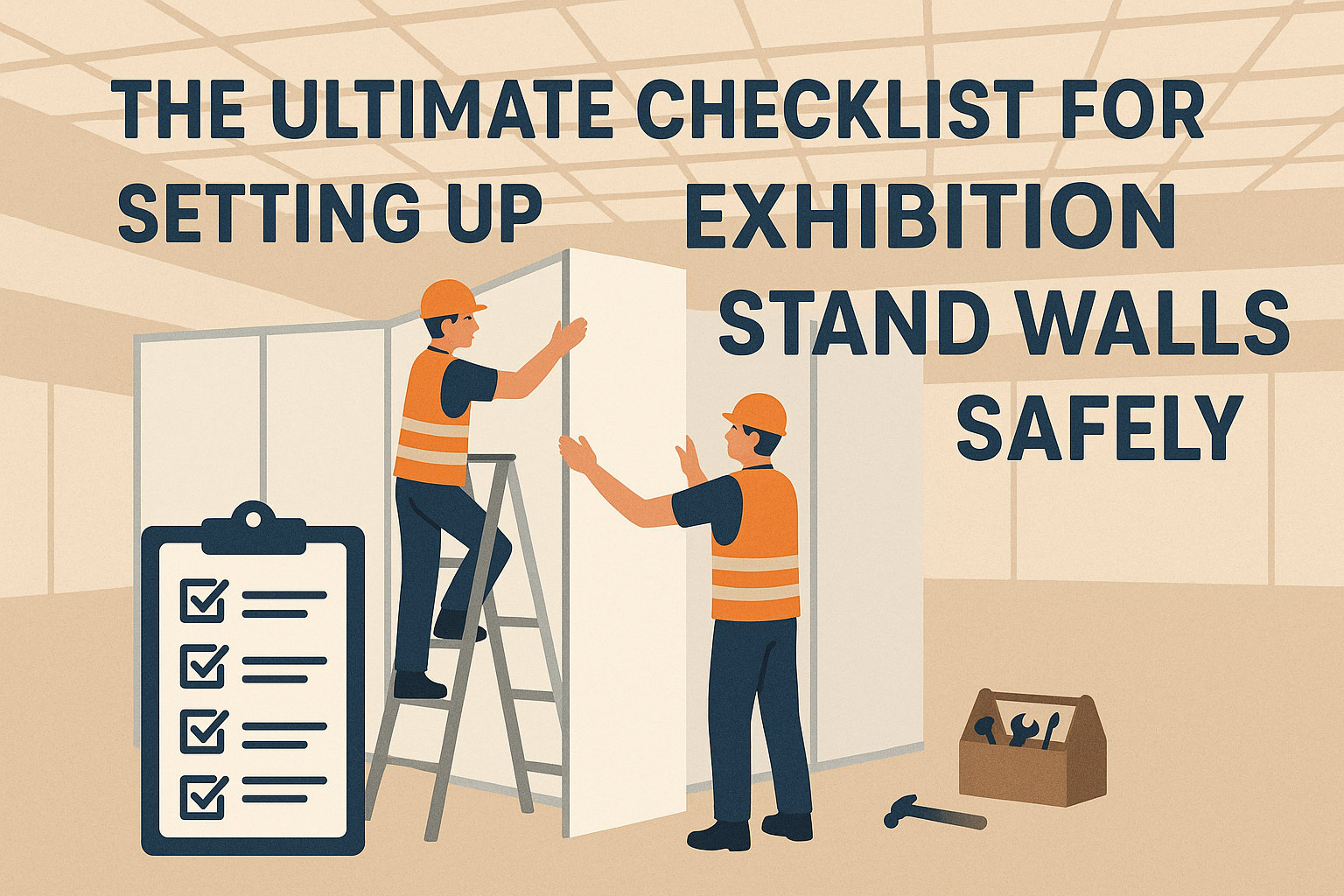
The Ultimate Checklist for Setting Up Exhibition Stand Walls Safely
Exhibition stand walls are the foundation of any successful display — they shape your layout, support your graphics, carry your lighting, and define your entire visual identity. But before they can do any of that, they must be installed safely.
Whether you’re using modular panels, temporary walling systems, or custom-built structures, proper setup is essential to protect your team, your stand, and your visitors. A single loose panel or incorrectly weighted wall can cause major issues, so safety should always come before aesthetics.
This ultimate safety checklist ensures your exhibition stand walls are installed securely, professionally, and fully compliant with event regulations.
1. Review the Venue’s Safety Guidelines
Before you even start planning the build, check the venue’s mandatory requirements.
Most exhibition halls provide guidelines covering:
Maximum wall height
Permitted materials
Fire safety ratings
Weight-loading restrictions
Fixing limitations (e.g., no drilling into floors or walls)
Approved methods for securing walls
Understanding these rules early prevents delays — or even rejected stand builds — on installation day.
2. Confirm Wall Specifications With Your Supplier
If you’re hiring or purchasing modular or temporary walls, make sure you know:
Maximum load capacity
Whether walls are self-supported or require weighting
Compatibility with lighting or screens
Recommended fixings
The required footprint or base plates
Whether professional installation is included
Not all exhibition walls are built the same. Clear communication avoids costly on-site surprises.
3. Ensure You Have a Level and Stable Floor
A stable structure starts with a stable base.
Before installing, check:
The floor is level
There are no uneven areas or slopes
Carpeting or raised platforms are securely fitted
Electrical cables are protected and won’t interfere with wall feet
Freestanding walls must be stable from the ground up — even small floor variances can affect alignment and safety.
4. Use the Correct Tools and Fixings
Never improvise when setting up exhibition stand walls.
Every panel and joint must be fixed using the exact components supplied.
Double-check you have:
All connectors
Securing brackets
Locking mechanisms
Base weights or feet
Allen keys and required tools
If something is missing, do not substitute it — request a replacement part from your supplier.
5. Secure Freestanding Walls With Appropriate Weighting
Freestanding and tall walls need additional stability.
This may include:
Steel base plates
Hidden floor weights
Back supports
Interlocking panel systems
Angled brace legs
Never assume a tall exhibition wall will stand safely on its own. Proper weighting prevents tipping, especially in high-traffic areas.
6. Build in the Correct Order (Start With Structural Panels)
A safe installation always follows a planned sequence.
The correct order is typically:
Place floor marks or tape for layout
Install main load-bearing panels first
Add corner walls for stability
Connect and brace long wall sections
Install mid-height and feature walls
Add finishing panels and graphic surfaces
This ensures every section supports the next, reducing the risk of collapse during installation.
7. Check for Alignment, Secure Joins, and Wall Stability
Once erected, inspect every wall carefully.
Look for:
Gaps between panels
Loose joints
Visible movement when gently pushed
Uneven tops or leaning angles
Misaligned corners
Panels that don’t sit flush
If anything feels unstable, it must be corrected immediately before moving on.
8. Ensure Safe Integration of Lighting and Electricals
Lighting adds both beauty and complexity to your exhibition walls.
Follow these safety rules:
Only mount lights on walls designed to support them
Use low-heat LED fixtures
Avoid overloading sockets
Use cable management to prevent tripping
Secure all wiring behind or beneath walls
Never hang lights from unsupported weak points
Lighting should enhance your stand — not endanger it.
9. Don’t Overload Walls With Heavy Items
Every wall system has a weight limit.
Overloading panels with heavy shelving, artwork, or screens can cause structural failure.
Before installation:
Confirm weight capacity (per panel & per linear metre)
Use reinforced walls for screens or heavy products
Mount large screens only on approved brackets
Spread loads evenly
If in doubt, always ask your supplier.
10. Keep Escape Routes Clear and Accessible
Safety isn’t only about the walls — it’s about your whole stand footprint.
Make sure:
No wall blocks emergency exits
Staff can safely move behind the stand
Walkways remain open
Fire extinguishers or alarms are accessible
Storage areas do not create hazards
Compliance keeps both visitors and your team safe.
11. Conduct a Final Safety Inspection Before Opening
Before the exhibition begins, perform a full walk-through to check:
All walls are stable and braced
All fixings are secure
No loose screws or connectors remain
Lighting is safely mounted
Cables are tidy and protected
Graphic panels are securely attached
Nothing obstructs pathways
This last check ensures your stand meets safety requirements — and looks flawless.
Conclusion: Safe Wall Installation Is the Foundation of a Successful Exhibition
Your exhibition stand walls set the tone for your entire display. Installing them safely isn’t just a technical step — it’s essential for protecting your visitors, staff, and brand reputation. By following a clear, professional process and working with reliable walling systems, you can build confidently and create an exhibition space that stands strong from start to finish.
Need Exhibition Walls Installed Safely and Professionally?
We provide premium exhibition walls with full installation, ensuring your stand is stable, compliant, and exhibition-ready.
👉 Contact us today to book a safe, seamless wall installation for your next event.