
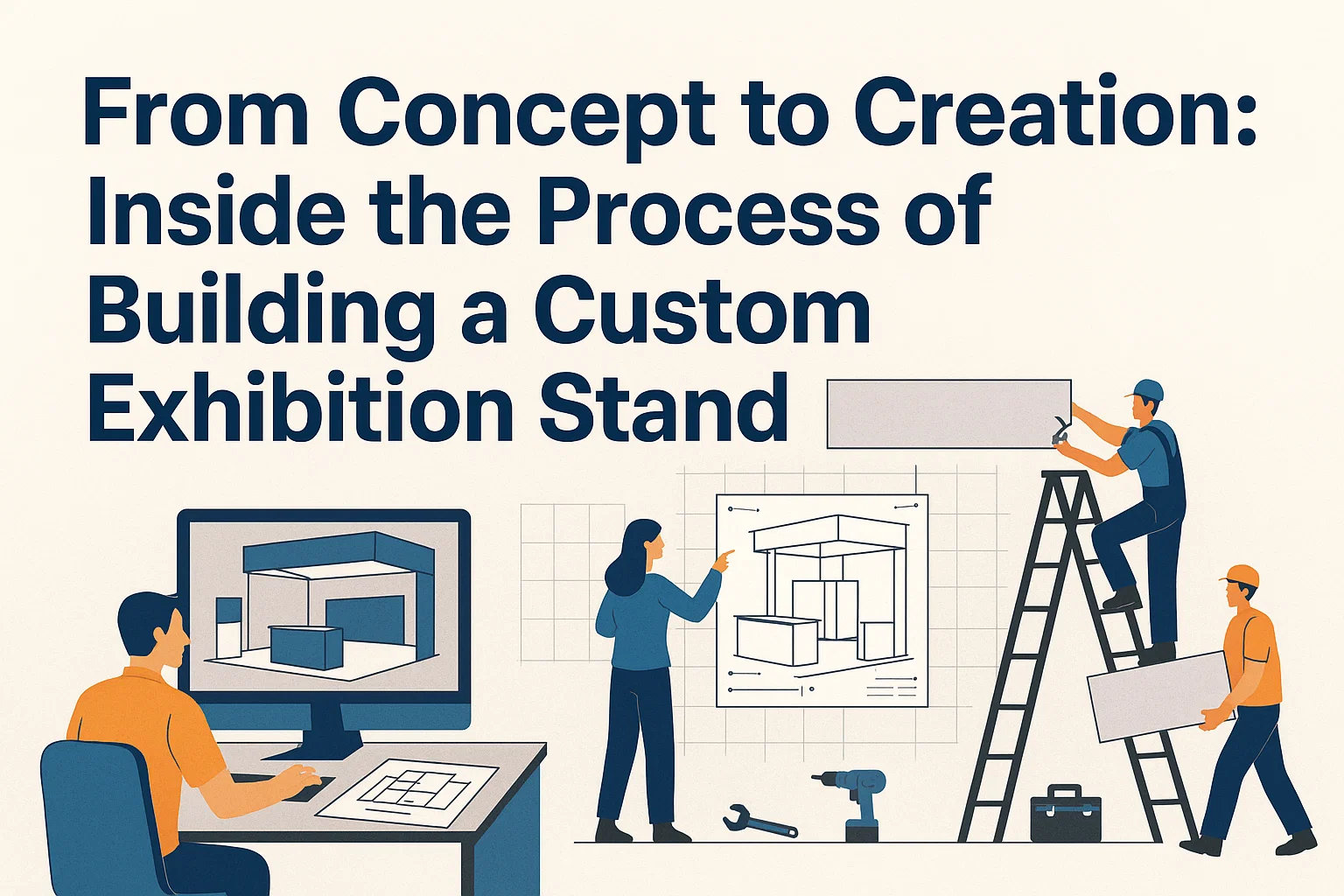
From Concept to Creation: Inside the Process of Building a Custom Exhibition Stand
Every great exhibition starts with a great idea. Whether it’s a small pop-up booth or a large trade show installation, a successful stand is more than just walls and graphics — it’s a carefully crafted brand experience.
In this article, we’ll take you behind the scenes of building a custom exhibition stand, from the first concept to the final installation. You’ll see how design, structure, and creativity come together to bring your brand to life.
1. Understanding the Brief
Every project begins with understanding your goals. Before any sketches or structures take shape, an experienced exhibition team will ask questions like:
Who is your target audience?
What message do you want to communicate?
What products or services are being featured?
What space and budget do you have to work with?
The answers form the foundation for the entire design process. A great custom exhibition stand isn’t just about aesthetics — it’s about delivering your brand’s story in a way that attracts, engages, and converts visitors.
2. Designing the Concept
Once the brief is clear, the design stage begins. This is where creativity and strategy meet.
Designers create 3D visuals and layout plans, mapping out everything from exhibition stand walls and lighting to signage, flooring, and visitor flow.
During this phase, the focus is on:
Maximising visibility and space
Incorporating your brand colours, logos, and messaging
Creating an environment that feels inviting and memorable
The goal is to design a stand that not only looks impressive but also functions perfectly within the constraints of the exhibition venue.
3. Selecting Materials and Structure
The structure of your stand determines its durability, weight, and visual appeal. Most modern custom exhibition stands use modular wall systems that can be adapted and reused for future events.
Common materials include:
Lightweight aluminium frameworks
Reusable exhibition wall panels
Sustainable wood or composite finishes
Printed graphics and LED-integrated surfaces
Using modular components makes installation faster and more sustainable — while still allowing complete creative freedom in layout and style.
4. Branding and Graphic Design
Graphics and visuals are where your message truly shines. High-quality printed panels, backlit displays, and digital screens help tell your story and attract attention from across the exhibition hall.
Your exhibition stand walls become prime real estate for impactful branding. This includes:
Large-format logo displays
Product photography or lifestyle imagery
Taglines and calls to action
LED or backlit branding elements
Every graphic should align with your overall marketing campaign — reinforcing your message while drawing visitors in for a closer look.
5. Building and Pre-Assembly
Before your stand ever reaches the exhibition hall, it’s built and tested in a controlled environment. This pre-build process ensures:
All exhibition stand walls and structures fit perfectly
Electrical, lighting, and multimedia systems work as intended
The finish and detailing meet the highest standards
This phase is crucial for spotting issues early and guaranteeing a smooth installation on-site.
6. Installation and Setup
Installation day is where concept meets reality. A professional exhibition team will transport, assemble, and finish your stand, ensuring everything is structurally sound, safe, and visually perfect.
From securing modular exhibition walls to connecting LED lighting and display screens, every detail is handled with precision. The result: a custom stand that’s ready to impress from the moment the doors open.
7. Lighting and Finishing Touches
Lighting is one of the most powerful design tools in any exhibition environment. Proper illumination highlights your branding, products, and messaging — turning your stand from functional to unforgettable.
Techniques include:
Integrated LED strips within wall panels
Spotlights for products or artwork
Colour-changing lights for atmosphere
Backlit graphics for high-impact visuals
Combined with stylish flooring, furniture, and décor, these finishing touches make your stand feel professional and polished.
8. During the Show: Engagement and Experience
Even the best-designed stand needs human connection. Train your staff to engage visitors confidently, answer questions, and capture leads.
Consider interactive features like:
Touchscreens or demo stations
Digital product catalogues
Live presentations or VR experiences
Your stand should act as both a marketing tool and an immersive environment that embodies your brand.
9. Dismantle, Storage, and Reuse
After the exhibition, the stand is carefully dismantled and stored for future use. This is where modular exhibition stand walls really shine — they can be reconfigured for different layouts and events, saving both time and money.
Many exhibitors now reuse their stand structures multiple times a year, simply updating graphics and lighting to match new campaigns. This approach is both sustainable and cost-effective.
Conclusion: Turning Vision Into Reality
From initial concept to final installation, building a custom exhibition stand is a collaborative process that combines design, engineering, and marketing expertise.
With the right materials — such as modular exhibition stand walls — and a skilled team, you can transform an empty floor space into a powerful brand experience that connects with visitors and drives results.
Your stand isn’t just a structure — it’s a statement. Make it count.
Bring Your Exhibition Vision to Life
We specialise in custom exhibition stands, modular wall systems, and turnkey installation services for exhibitions across the UK.
From design and build to lighting and logistics, we help you every step of the way — ensuring your stand looks exceptional and performs flawlessly.
👉 Contact us today to start designing your next exhibition stand and see how we can bring your concept to life.