
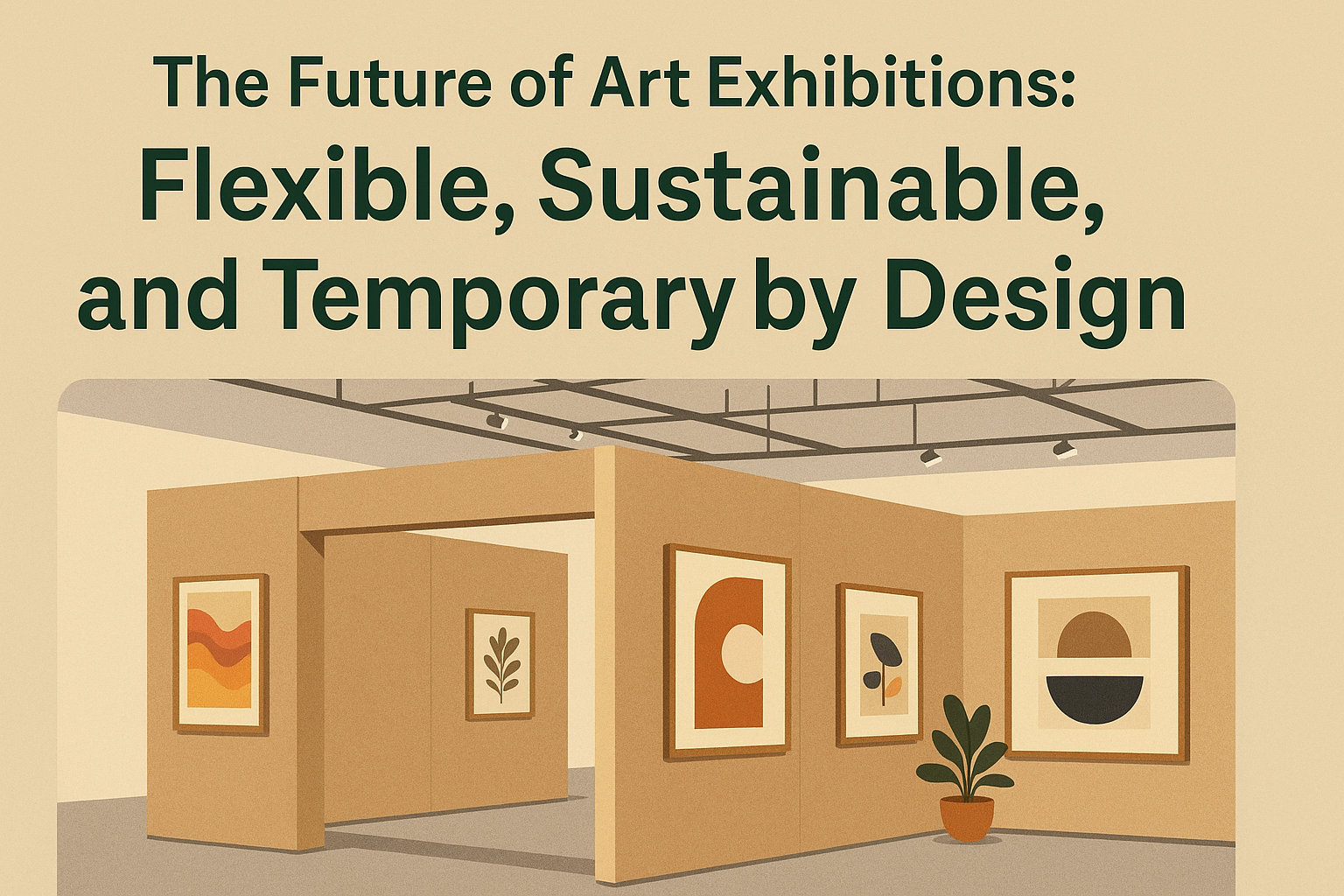
The Future of Art Exhibitions: Flexible, Sustainable, and Temporary by Design
The art world is changing — fast. As galleries, curators, and artists rethink how exhibitions are created and experienced, a new era of design is emerging. Today’s exhibitions are more flexible, more sustainable, and increasingly built around temporary systems that adapt to different venues and creative needs.
From pop-up galleries to touring shows and environmentally responsible displays, the future of art exhibitions is no longer tied to permanent walls or traditional spaces. Instead, it’s driven by innovation, mobility, and a deeper awareness of environmental impact.
Here’s how the next generation of exhibitions is being shaped — and why temporary, modular design is now at the heart of it.
1. Flexibility Is Becoming Essential for Modern Exhibitions
The days of static, unchangeable exhibition layouts are fading. Artists and curators now need adaptable spaces that can evolve with each event — and even change throughout a single show.
Flexible exhibition design allows:
Displays to be reconfigured quickly
Spaces to adapt to multiple artists or disciplines
Curators to create immersive storytelling layouts
Exhibitions to tour different venues with ease
Creative freedom without architectural limitations
Temporary and modular wall systems make this possible. Instead of relying on fixed gallery architecture, curators use movable walls, modular partitions, and temporary art walls to shape the space however the exhibition requires.
2. Sustainability Is Now a Core Priority
Environmental responsibility is no longer optional — and the art world is responding. Traditional exhibition builds often create unnecessary waste through single-use materials, painted MDF, or disposable structures. That model is quickly becoming outdated.
Sustainable exhibition practices include:
Reusable walling systems
Recycled or low-impact materials
LED lighting to reduce energy consumption
Digital labels instead of printed catalogues
Minimalist, eco-friendly installation choices
Temporary and modular walls are naturally aligned with sustainability: they can be used repeatedly for years, drastically reducing waste and cost. For organisations looking to balance aesthetics with environmental values, they’re now the gold standard.
3. The Rise of Pop-Up and Mobile Exhibitions
Pop-up galleries, touring exhibitions, and short-term installations are more popular than ever. They allow artists and organisations to bring art directly to communities, retail spaces, universities, festivals, and even outdoor structures.
Why mobile exhibitions are booming:
Lower costs than traditional venues
Freedom to experiment with unconventional locations
Faster turnaround times
Greater accessibility for audiences
Ideal for artist collectives and independent curators
Temporary art walls are essential for these shows, providing a clean, gallery-standard backdrop anywhere — from empty shops to industrial warehouses.
4. Hybrid and Digital Integration Enhance Physical Shows
Technology is now seamlessly blending with physical exhibitions. While the artwork remains central, digital tools add accessibility, engagement, and depth.
Expect to see more:
QR-linked artist statements and audio guides
Projection art and digital installations
Interactive screens mounted on temporary walls
Virtual and augmented reality experiences
Live-streamed exhibition openings
Temporary and modular walling systems can easily support screens, lighting, and digital hardware, making them perfect for hybrid exhibitions.
5. Modular Walls Allow Curators to Build Custom Experiences
One of the biggest shifts in the exhibition world is the move towards bespoke layouts that are unique to each show. Rather than forcing exhibitions to fit a static space, the space is now shaped around the artwork.
Modular walls give curators complete creative control:
Build long linear runs for photography
Create maze-like pathways for immersive shows
Add curved or angled walls for movement and flow
Use central “island” walls for 360-degree viewing
Form intimate alcoves for sensitive or thematic work
This level of customisation was once exclusive to large galleries. Now, thanks to modular systems, anyone can design a professional layout.
6. Temporary Doesn’t Mean Lower Quality — It Means Smart Design
There’s a growing understanding that “temporary” does not equate to cheap or improvised. Today’s temporary exhibition walls are engineered to a high standard, designed to look and feel like permanent gallery walls.
High-quality temporary walls are:
Solid, strong, and stable
Smooth and gallery-grade
Able to support heavy framed pieces
Quick to install and dismantle
Reusable for years
Compatible with lighting, brackets, and hanging systems
Temporary is no longer a compromise — it’s a strategic choice for modern, efficient exhibition building.
7. More Exhibitions, Less Waste: A Better Future for the Art World
With flexible design, modular systems, and sustainable materials, the future of art exhibitions is smarter and more responsible.
The new exhibition landscape prioritises:
Creative freedom
Lower environmental impact
Better accessibility
Cost-effective design
High-quality visitor experiences
Mobility and adaptability
This shift empowers emerging artists, educational organisations, pop-ups, and established galleries alike.
Conclusion: The Future Is Flexible, Sustainable, and Temporary
Art exhibitions are entering a new era — one defined by innovation rather than constraints. Flexible layouts, reusable wall systems, eco-friendly practices, and mobile exhibition formats are reshaping how art is displayed and experienced.
With temporary art walls and modular exhibition design, any space can become a curated gallery. Any event can become a professional exhibition. And any artist can share their work without the limitations of permanent architecture.
The future of exhibiting is adaptable, ethical, and beautifully designed — and it’s already here.
Ready to Build a Flexible, Sustainable Exhibition?
We specialise in high-quality temporary and modular wall systems that help galleries, artists, and curators build exhibitions that are modern, sustainable, and unforgettable.
👉 Contact us today to plan your next forward-thinking art exhibition.