
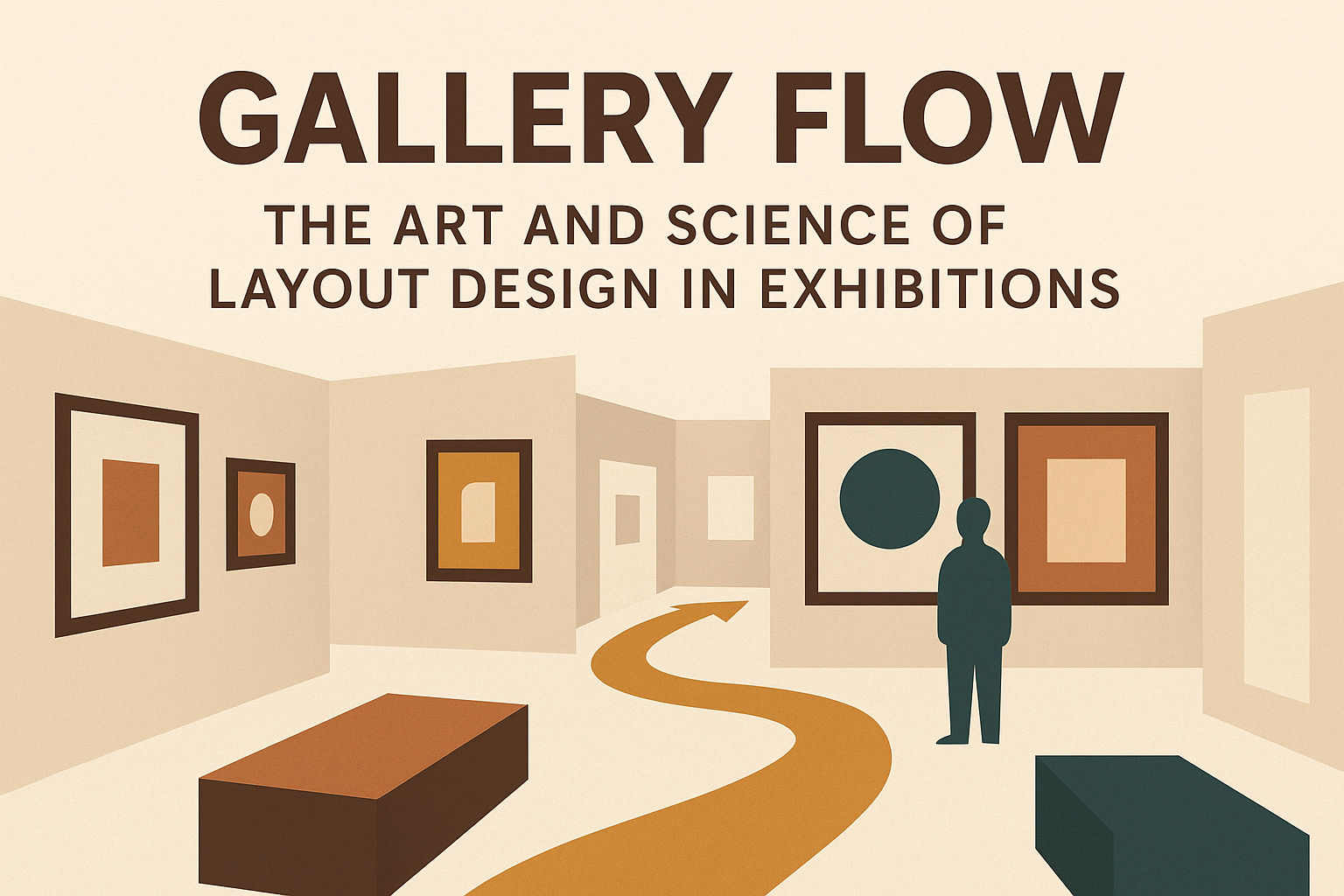
Gallery Flow: The Art and Science of Layout Design in Exhibitions
A great art exhibition doesn’t just showcase art — it guides visitors. It shapes how they move, how long they stay, what they notice, and ultimately, what they feel. This invisible choreography is known as gallery flow, and it’s one of the most powerful tools in professional exhibition design.
Whether you’re designing a contemporary art show, a pop-up gallery, or a student exhibition, understanding the art and science behind layout design can transform any space into a meaningful, immersive experience.
1. What Is Gallery Flow — and Why Does It Matter?
Gallery flow is the intentional arrangement of artwork, walls, pathways, lighting, and viewing points to guide visitors through an exhibition in a natural, engaging way.
A strong gallery flow ensures:
Visitors don’t feel lost or overwhelmed
Each piece or section receives proper attention
The story of the exhibition unfolds clearly
People spend more time interacting with the work
The space feels harmonious and professionally curated
Great flow doesn’t happen by accident — it comes from deliberate, thoughtful design.
2. Start With the Visitor Journey
Before you hang a single artwork, you need to imagine the exhibition from the visitor’s perspective.
Ask yourself:
Where should their journey begin and end?
What should they see first — and last?
How do you want them to feel along the way?
Which works deserve the most visibility or emotional impact?
By mapping this journey, you can design a layout that feels intuitive and meaningful.
3. Use Temporary Walls to Establish Structure and Movement
Walls — whether permanent or temporary — are the backbone of gallery flow. The placement, length, and orientation of your walls directly shape how visitors move and interact with the artwork.
Use walls to:
Create pathways
Divide the exhibition into themes or chapters
Establish sightlines
Highlight focal points
Manage crowd flow
Temporary or modular wall systems are especially valuable, giving curators the flexibility to build layouts that support the flow they envision.
4. Create Zones and Transitions
Great exhibitions are organised into zones — smaller sections that each tell a part of the overall story.
Types of zones include:
Introductory spaces explaining the theme
Thematic clusters of related works
Feature zones for standout pieces
Interactive or digital areas
Quiet pockets for reflection
Transitioning between zones with lighting, spacing, or subtle wall angles helps maintain a smooth, uninterrupted visitor journey.
5. Use Sightlines to Guide Attention
A sightline is what a visitor sees when they take a step, turn a corner, or enter a room.
Strong sightlines draw people forward and help guide movement without the need for signage.
Great sightline strategies include:
Placing a striking piece at the end of a corridor or run
Using angled walls to frame key artworks
Positioning large works where they create visual anchors
Creating “reveals” as visitors turn or move through spaces
Sightlines add drama, curiosity, and intentionality to your layout.
6. Balance Rhythm and Spacing
Good exhibitions have rhythm — a balance between visual intensity and visual rest.
To create rhythm:
Mix large works with smaller ones
Alternate bold pieces with softer pieces
Use consistent spacing to keep the eye moving
Leave negative space to prevent visual overload
Spacing is a science as much as an art. Too little space feels cluttered; too much can make the exhibition feel sparse or disconnected.
7. Plan for Comfort and Accessibility
Gallery flow isn’t just aesthetic — it’s functional too.
Ensure your layout:
Provides enough room for groups to move comfortably
Allows wheelchair or pushchair access
Prevents bottlenecks near popular works
Includes seating areas for longer exhibitions
Offers space for reading, interaction, or reflection
Visitors engage more when they feel comfortable and unhurried.
8. Use Lighting to Support Flow
Lighting guides the eye, shapes emotion, and enhances the layout.
Strategic lighting can:
Highlight focal points
Create transitions between zones
Add depth to tight spaces
Reduce distractions from surrounding areas
Make movement intuitive
Good lighting reinforces the journey you want visitors to take.
9. Consider the Narrative Structure
Every exhibition has a story — even if it’s not explicitly stated.
Your layout should support that narrative.
Possible structures include:
Chronological storytelling
Thematic clusters
Contrast-based arrangements
Progressive intensity (starting soft, building impact)
Artist journey or process-driven sequences
When the layout reflects the narrative, the entire exhibition feels cohesive and immersive.
10. Test the Flow Before Opening
The final stage? Walk the space yourself.
Ask:
Does the layout feel natural?
Are any areas confusing or congested?
Do key pieces receive the attention they deserve?
Is there a consistent visual rhythm?
Would a visitor intuitively know where to go next?
Sometimes minor adjustments — moving a wall slightly, adjusting lighting, or repositioning a piece — dramatically improve the experience.
Conclusion: Gallery Flow Is the Secret to Memorable Exhibitions
A beautifully curated exhibition isn’t just about great artwork — it’s about how the audience experiences it.
By understanding the art and science of layout design, you can transform any venue into a coherent, engaging, and professional gallery space.
From wall placement and spacing to sightlines and storytelling, every detail contributes to a smoother, richer visitor experience.
Master gallery flow, and you create exhibitions that linger in the mind long after visitors leave.
Need Professional Walling to Create Perfect Gallery Flow?
We provide premium modular and temporary wall systems that help curators design flexible, gallery-quality layouts in any space.
Whether you’re planning a pop-up, student exhibition, or large-scale show, our walls help you create flawless flow and professional presentation.
👉 Contact us today to start designing your next exhibition layout.